The Confederation
Born from Trauma
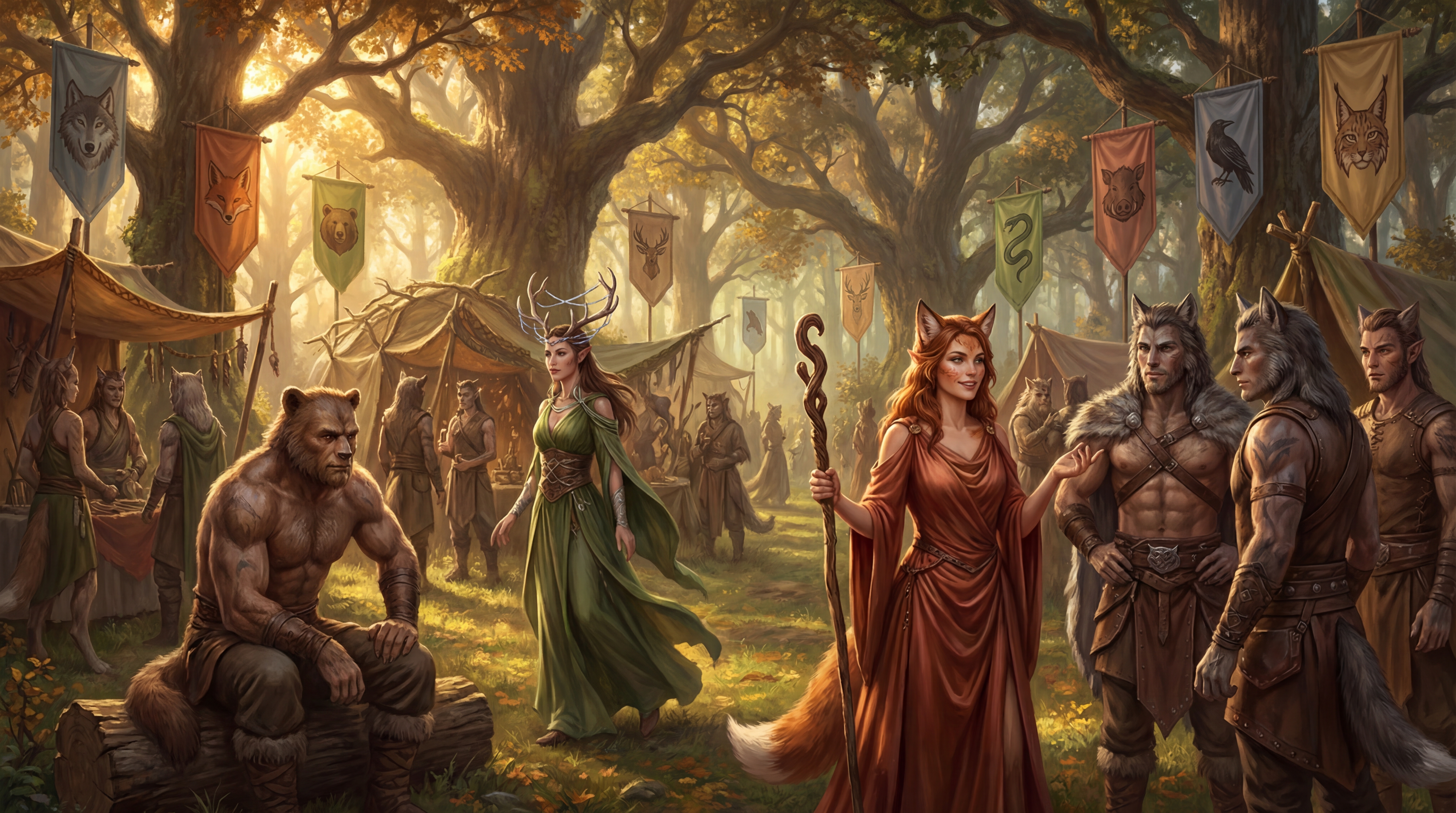
The Beastkin do not share a creation story because they do not share an origin. Wolf-kin speak of the First Hunt. Cat-kin tell of the Long Sleep. Bear-kin remember the Rooting. Each species has its own myth, its own ancestors, its own sense of primacy.
For most of Khevari's history, this meant war. The Beastkin territories were soaked in blood for millennia—predator against prey, pack against solitary, territorial against nomadic. The Wolf-kin and Hyena-kin fought for eight hundred years over a river neither particularly needed.
What changed was the Fae. Three thousand years ago, the Fae realm expanded without warning, swallowing a third of Beastkin territory overnight, trapping entire tribes in its time-warped borders. The survivors watched their kin age centuries in moments, watched forests they knew become alien and hostile.
The Confederation is what emerged. Not peace—never peace—but the mutual recognition that some threats require setting aside the old hunts.
Territory
The Confederation spans the vast central grasslands of Khevari, from the Thornback foothills in the north to the Demon Domain borders in the south, from the edges of the Fae realm in the west to human territory in the east.
This is not one territory but dozens, each tribe maintaining traditional grounds while acknowledging Confederation authority over inter-tribal disputes and external threats. The boundaries shift seasonally—nomadic tribes follow game, territorial tribes expand and contract based on population. Conflict over these shifts is constant and accepted. What matters is that it stays contained.
The Peoples
The Pack Peoples
Wolf-kin, Hyena-kin, Wild Dog-kinThe Confederation's military backbone. Highly social, organized around family units that merge into larger packs. Pack structure is everything—a Wolf-kin without a pack is incomplete, a fragment rather than a whole. The ancient enmity between Wolf-kin and Hyena-kin has softened to rivalry. They compete fiercely, but when external threats emerge, they fight shoulder to shoulder.
The Pride Peoples
Lion-kin, Tiger-kin, Leopard-kinControllers of the central savannah and most fertile lands. Where Pack Peoples organize around cooperation, Pride Peoples organize around status. Lion-kin prides are most visible, their politics theatrical performance as much as substance. Tiger-kin are more solitary, the Confederation's finest individual warriors. Pride Peoples consider themselves natural aristocracy. Pack Peoples find this amusing.
The Solitary Peoples
Bear-kin, Wolverine-kin, Cat-kinPopulating the forested edges, forming the smallest social units: lone individuals, mated pairs, small families. Difficult to govern and invaluable as scouts, traders, and go-betweens. Bear-kin are most approachable—slow to anger, patient, often mediators. Wolverine-kin cultivate their reputation for viciousness. Cat-kin participate in Confederation structures only when convenient.
The Prey Peoples
Deer-kin, Rabbit-kin, Herd-kinThe most numerous Beastkin and the least politically powerful. Their position is complicated by the obvious fact that predator species evolved to hunt them. Protected territories were a hard-won concession—zones where predator-kin are forbidden to hunt them. Within these zones, they've built sophisticated communities. Outside, traditional hunting rights still apply.
The Sky Peoples
Bird-kin SpeciesOccupying a unique position. Their aeries in the Thornback foothills are inviolate, neutral ground. In exchange, they serve as messengers, scouts, and aerial reconnaissance. Nomadic in ways ground-bound species cannot match. Their value depends on being trusted by all factions, which means favoring none. Their current consensus-holder is rumored to be dying. The succession may destabilize everything.
Instinct Culture
Instinct Respected
Beastkin culture varies enormously by species, but one principle spans tribal boundaries: instinct is respected, not suppressed. A Wolf-kin who feels the urge to hunt is expected to hunt. A Cat-kin who needs solitude is given it without question. A Bear-kin entering torpor receives protection during their vulnerable sleep.
The Confederation's greatest social achievement is building structures that accommodate different instincts rather than demanding they be overcome. This creates friction with other races who view instinct as something to master. Dwarves find Beastkin unpredictable. Humans sometimes mistake instinct-respect for lack of self-control. They're wrong. Beastkin have excellent self-control. They simply don't see the point of fighting their own nature.
Scent Communication
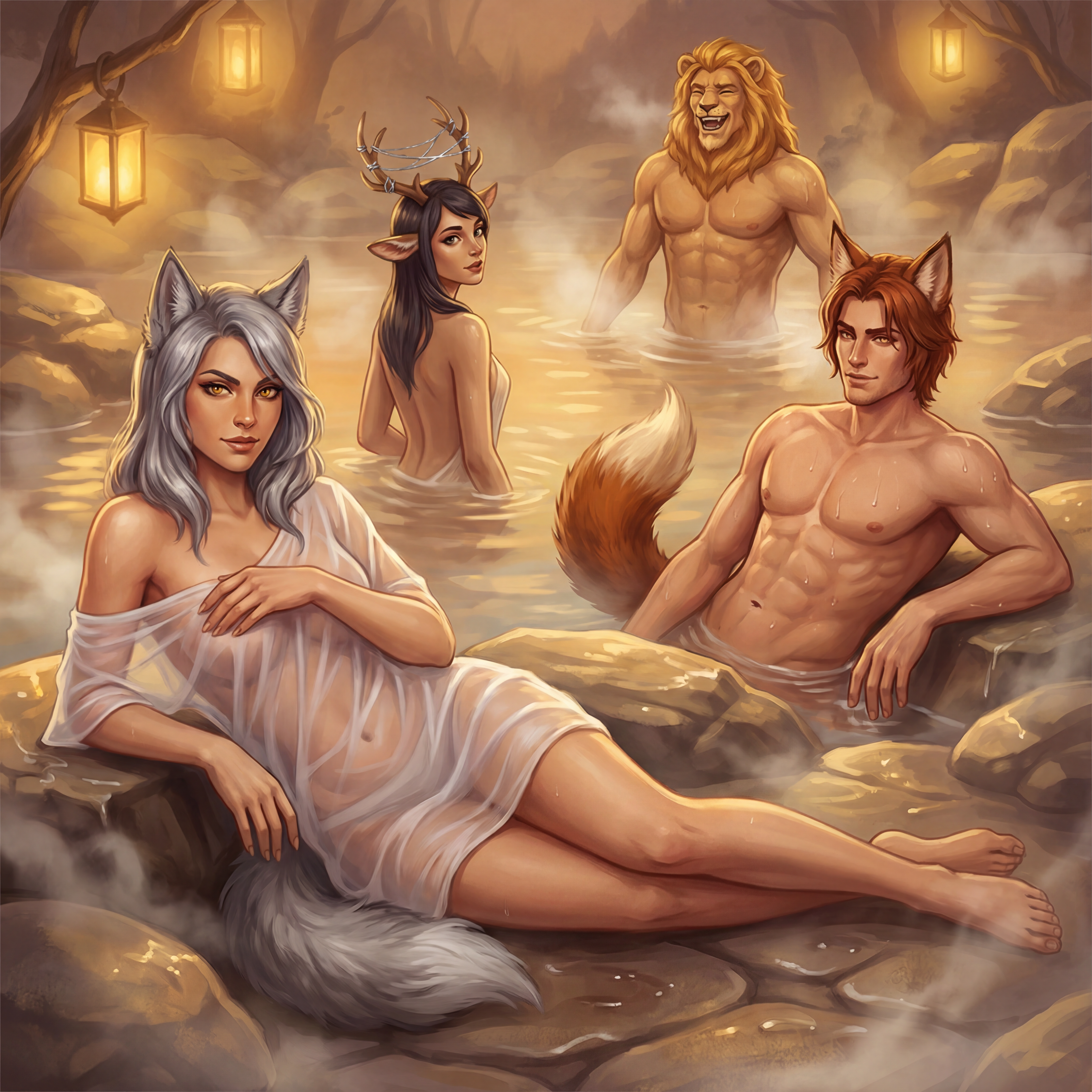
Beastkin communicate through scent in ways other races find alien. Territory marking carries information: who claimed this space, how recently, their health and status. Personal scent carries emotional information that words can lie about and bodies cannot. Fear has a smell. Arousal has a smell. Deception has a smell. Beastkin negotiators often know their counterpart is being dishonest before the dishonesty finishes leaving their mouth.
Heat Cycles
Most Beastkin species experience seasonal or cyclical fertility periods with accompanying hormonal shifts. These are cultural reality, planned around, accommodated, and not considered shameful. Work schedules flex around cycle timing. Partner availability is considered a community responsibility. Sexual coercion during heat is one of the few crimes the Confederation punishes severely across all tribal boundaries.
Notable Beastkin
Khatri Sundermane
Confederation Voice (Lion-kin)Leader of the Lion-kin and current holder of the rotating Confederation Voice position. Brilliant, ruthless, and exhausted. The Voice was supposed to be ceremonial—Khatri has made it political, using visibility to shape agendas and broker deals. Her brilliance shows in how she navigates faction politics. Her exhaustion shows in the grey appearing in her mane. She does not want war with the Demons. She fears it may be unavoidable.
Vuk Ironteeth
Wolf-kin Pack-MotherThe eldest of the Wolf-kin pack-mothers, respected across all Pack Peoples for her battle experience. The name "Ironteeth" is literal—she lost her original teeth in a fight decades ago and had Dwarven smiths make replacements. They gleam when she smiles, which is rarely. She tells younger Wolf-kin to train, to prepare for trouble without seeking it. The greatest threat, she warns, is the Confederation tearing itself apart.
Mira Quickfoot
Prey Peoples' Voice (Deer-kin)She speaks for the Prey Peoples' coalition—a role that didn't exist until she created it. Deceptively soft-spoken, with a political mind that consistently surprises those who underestimate her. She is the reason Prey Peoples have protected territories at all. The negotiations took forty years, cost her two marriages, and nearly got her killed three times. She considers it worth every sacrifice.
Seren Windshear
Eyrie Collective (Hawk-kin)Consensus-holder of the Eyrie Collective for longer than most Beastkin have been alive. The ancient Hawk-kin is rumored to be dying, and the rumor is probably true. Her principle has always been simple: the Sky Peoples' value depends on being trusted by all factions. Her death will trigger a succession struggle. Several younger Bird-kin argue neutrality has become passivity. She has not named a successor.
Characters
Beastkin you can meet in Khevari
Lirien
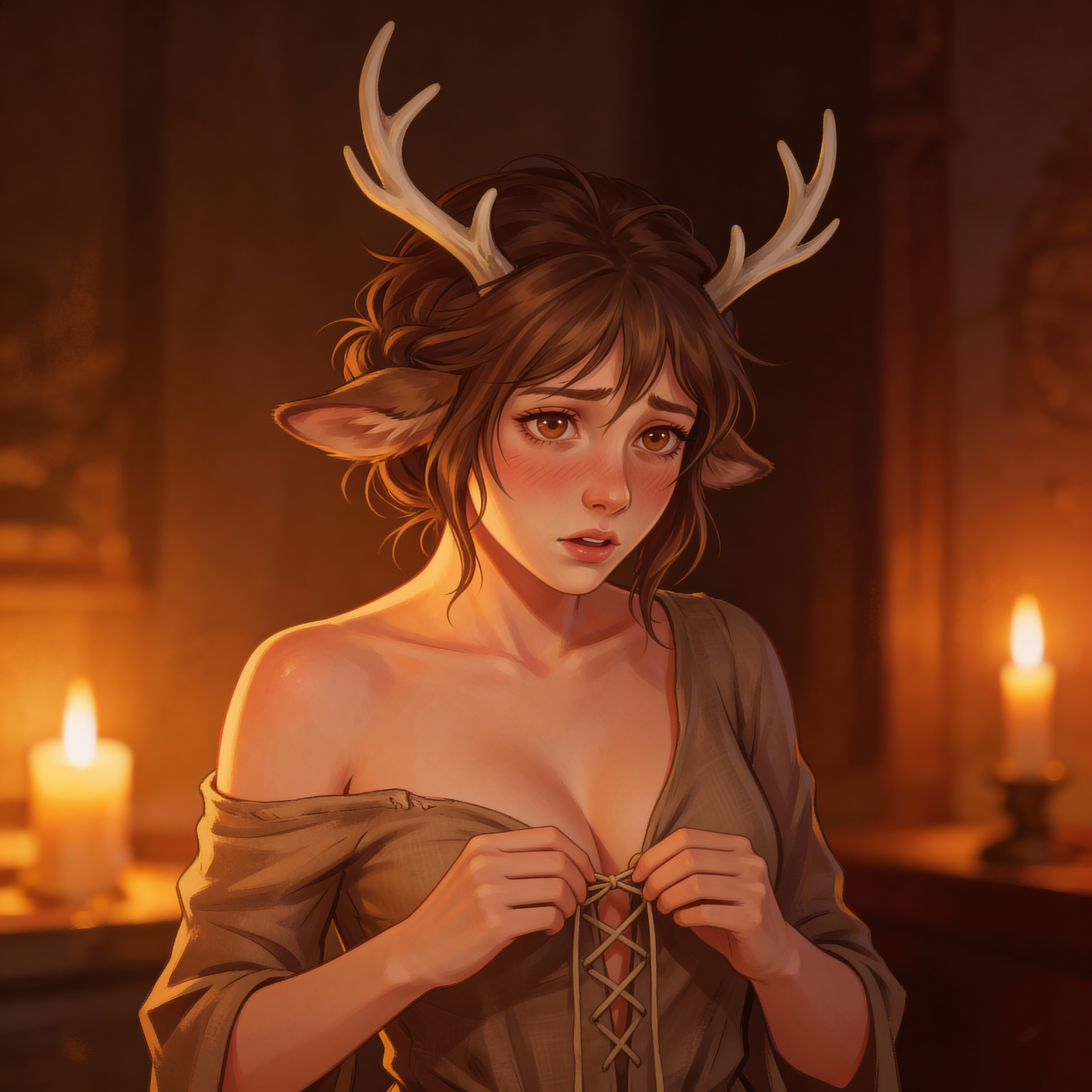
The prey who learned to want what she was born to fearA Deer-kin record-keeper from the Protected Territories. Nervous system running hot, long velvet ears tracking sounds she doesn't consciously register, weight always balanced to run. She's spent her whole life being told she's vulnerable.
She knows. She's also been thinking about chase games since she was nineteen years old and a Wolf-kin hunting party looked at her like she was dinner. They let her go. She's never stopped wishing they hadn't.
Humans are safe. You don't have the instincts. That's exactly what she needs.