The Realm
Beyond Comprehension
The Fae do not have history. They have duration. The realm simply is. It was here before the mountains rose. It will be here after they erode.
From outside, you see forests—ancient, dense, unwelcoming. The trees grow wrong. Too tall, too symmetrical, too aware. Animals avoid the treeline. Smart travelers do too.
Inside, geography becomes unreliable. A path walked once cannot be walked again. Distances stretch or compress without warning. Seasons exist simultaneously—a traveler might pass through spring, winter, and autumn in a single hour's walk, or spend weeks trapped in an endless summer afternoon.
⚠ Time Distortion Warning
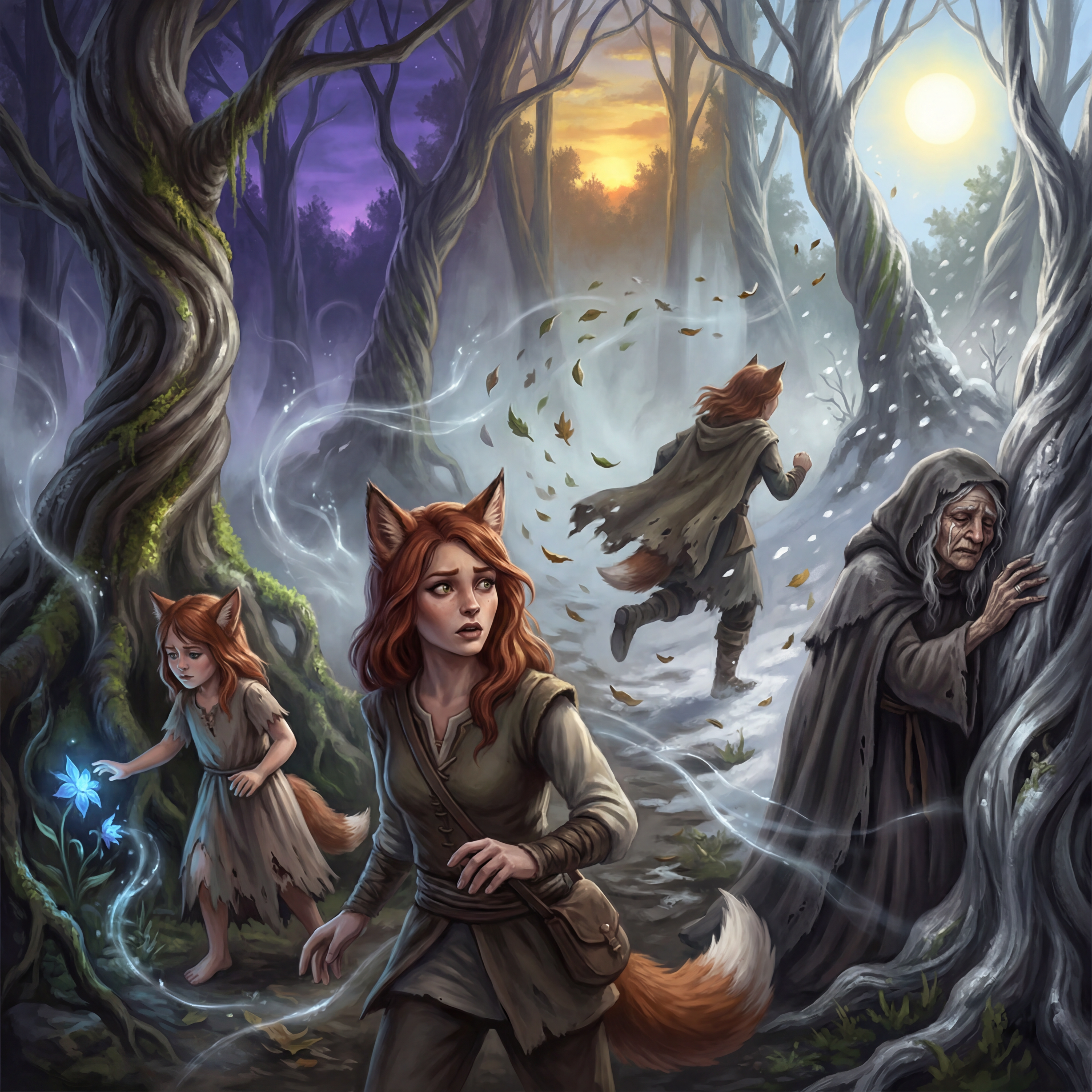
The Fae realm's time distortion is the most documented danger in Khevari. A scout who entered on a dare emerged three days later to find her pack had mourned her for sixty years. A Dwarven expedition mapped a hundred feet of territory over what felt like a week; they emerged to learn two centuries had passed in the Holds. The realm seems to choose its effects deliberately.
The Court of Seasons
Four great powers rule the realm—Spring, Summer, Autumn, and Winter. They do not rule cooperatively. They rule simultaneously, each supreme in their season, all seasons occurring at once within the realm.
The politics of the Court are incomprehensible to mortal minds. How do you negotiate with rulers who exist in eternal present, who experience past and future as equally accessible, who measure success in ways that have nothing to do with territory, wealth, or power as other races understand them?
Mortals who have glimpsed the Court describe beauty that damages, presence that erases memory, communication that leaves conceptual scars. The Fae do not mean to harm. They simply exist at scales and intensities that mortal minds cannot process without breaking.
Spring
Growth without restraintSummer
Power at its zenithAutumn
Beauty in declineWinter
The patient darkThe Elves
The Interface
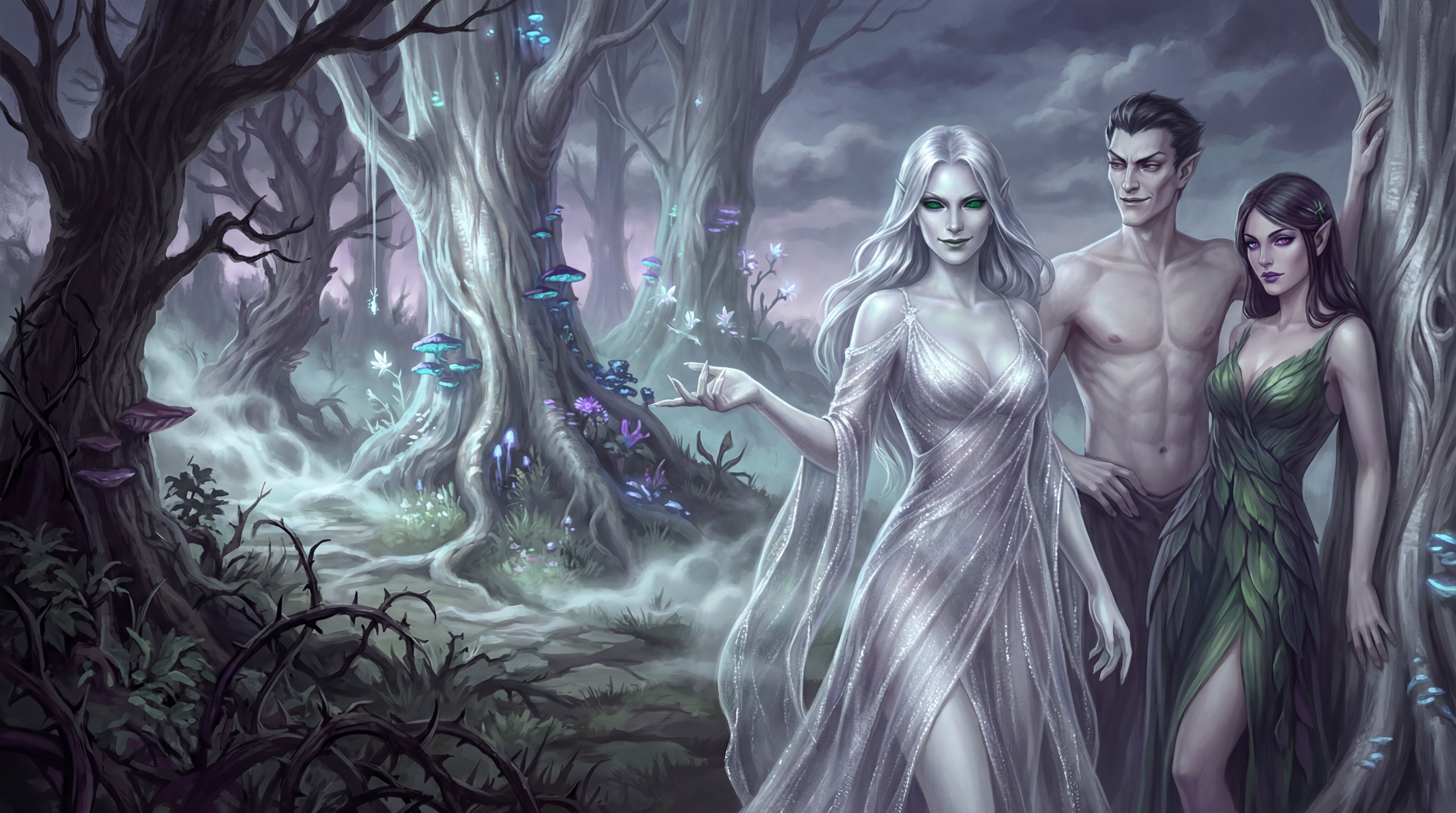
Elves are the Fae's mortal cousins—or creations, or reflections, depending on who tells the story. They live within the realm, subject to its time distortions, but they experience time in ways the true Fae do not. An Elf feels years pass. A Fae feels only the eternal present.
This makes Elves the interface between the Fae realm and the outside world. When other races must treat with the Fae, they speak to Elves. When the realm needs something from outside, Elves venture forth to acquire it. The relationship is symbiotic and strange—Elves serve the Fae, but the Fae need Elves in ways they would never admit.
Beautiful Cruelty
Beauty is moral imperative for Elves. Ugliness is not aesthetic preference but genuine ethical failure. An ugly object should be destroyed or remade. An ugly action should be undone. This applies to speech, craft, violence, and intimacy equally.
Elven cruelty is always elegant. When they kill, they do so beautifully. When they deceive, the deception is artful. When they abandon mortal lovers—which they do, eventually, always—they do so with grace that makes the abandoned feel honored to have been discarded so tastefully.
They do not understand death the way mortals do. An Elf's death returns them to the realm in some form. What do they have to fear?
Fascination with Mortality
Elves find mortals fascinating precisely because mortals end. The urgency mortality creates, the desperate intensity of lives measured in decades—it's exotic. Intoxicating, even. Some Elves develop what can only be called addiction to mortal company.
These Elves rarely return to the realm fully. They linger at its edges, venturing out for mortal companions, watching generations of friends and lovers age and die while they remain unchanged. It is unclear whether this is tragedy or choice.
Cross-species relationships with Elves are possible but dangerous. The Elf will outlive you. The Elf knows this from the beginning. For some Elves, this adds piquancy. For the mortal, it adds heartbreak.
Notable Elves
Elowen Silverbranch
The Ancient DiplomatThe eldest Elf still engaged with the outside world—a diplomat, trader, and professional interface between Fae indifference and mortal need. She is seven thousand years old, has watched civilizations rise and fall, and maintains a warmth toward mortals that other Elves find embarrassing.
Where most Elves view mortal lives as brief entertainments, Elowen seems to genuinely care. She remembers names. She asks about families. She returns to check on people decades later. When Dwarves need to communicate with the Fae realm, they seek Elowen. When human diplomats need Elven goods, they work through Elowen.
She alone might explain what the realm's current silence means. She hasn't explained anything. When asked, she smiles and changes the subject with skill that makes the questioner forget they were curious.
The Current Silence
The Fae realm is quiet, which worries everyone who has studied Fae patterns. For three hundred years—an eyeblink to Fae, but significant to mortals—the borders have been stable. No expansions. No contractions. No Fae venturing out for the elaborate games they once played with mortal lives. Even Elven traders have become rare.
Some theorize the Fae are sleeping. Others believe they're planning something. The Dwarven Listener Collective reports unusual vibrations from beneath the Fae realm—deep harmonics that suggest movement far underground.
Previous periods of Fae silence have ended in territorial expansion—the kind that swallowed a third of Beastkin territory three thousand years ago. Every race watches the treeline. Every race hopes the silence continues. Every race prepares for the possibility that it won't.
Characters
No Fae or Elven characters available yet. Check back as Khevari grows.