Power and Compromise
THE TREATIES
The Confederation Charter
3,000 yearsThe Charter binds the Beastkin tribes together, a three-thousand-year-old agreement that has survived through precedent and necessity rather than enforcement. Tribes maintain their own territories and customs, defer to the Confederation on external threats, and submit inter-tribal disputes to Council mediation.
The Charter has provisions for mutual defense against external threats. Whether "Demon territorial expansion" counts as such a threat is being debated urgently. The expansionist language was written when the Fae were the concern. Demons are different. They're not taking land. They're seeking access to people.
Under ReviewThe Tunnel Accords
AncientThe Accords govern Dwarven relationships with surface nations: passage rights, rescue obligations, and shared defense. The key provision relevant to current tensions: the Dwarves have promised to defend tunnel exits against hostile incursion. Mura sits atop a major exit.
What the Accords do not require is defense of surface territory in general. The Dwarves are under no obligation to protect human settlements, Beastkin lands, or anyone else's interests beyond the tunnel network itself. The Listener Collective reports more Dwarven movement than usual. The Holds are preparing something.
HoldingThe Ember Protocols
300 yearsThe Protocols regulate Demon activity outside the Domains: registration, feeding laws, consent requirements, disclosure obligations. Violations result in expulsion; severe violations result in worse. The system works because Demons benefit from it. A registered Demon in good standing can operate openly. An unregistered Demon is hunted.
Maelketh has not repudiated the Protocols. He has simply made clear that he considers them due for renegotiation. The current terms, he argues, restrict legitimate Demon interests in ways that no longer serve anyone. What "new terms" means is unclear.
ContestedThe Mura Compact
400 years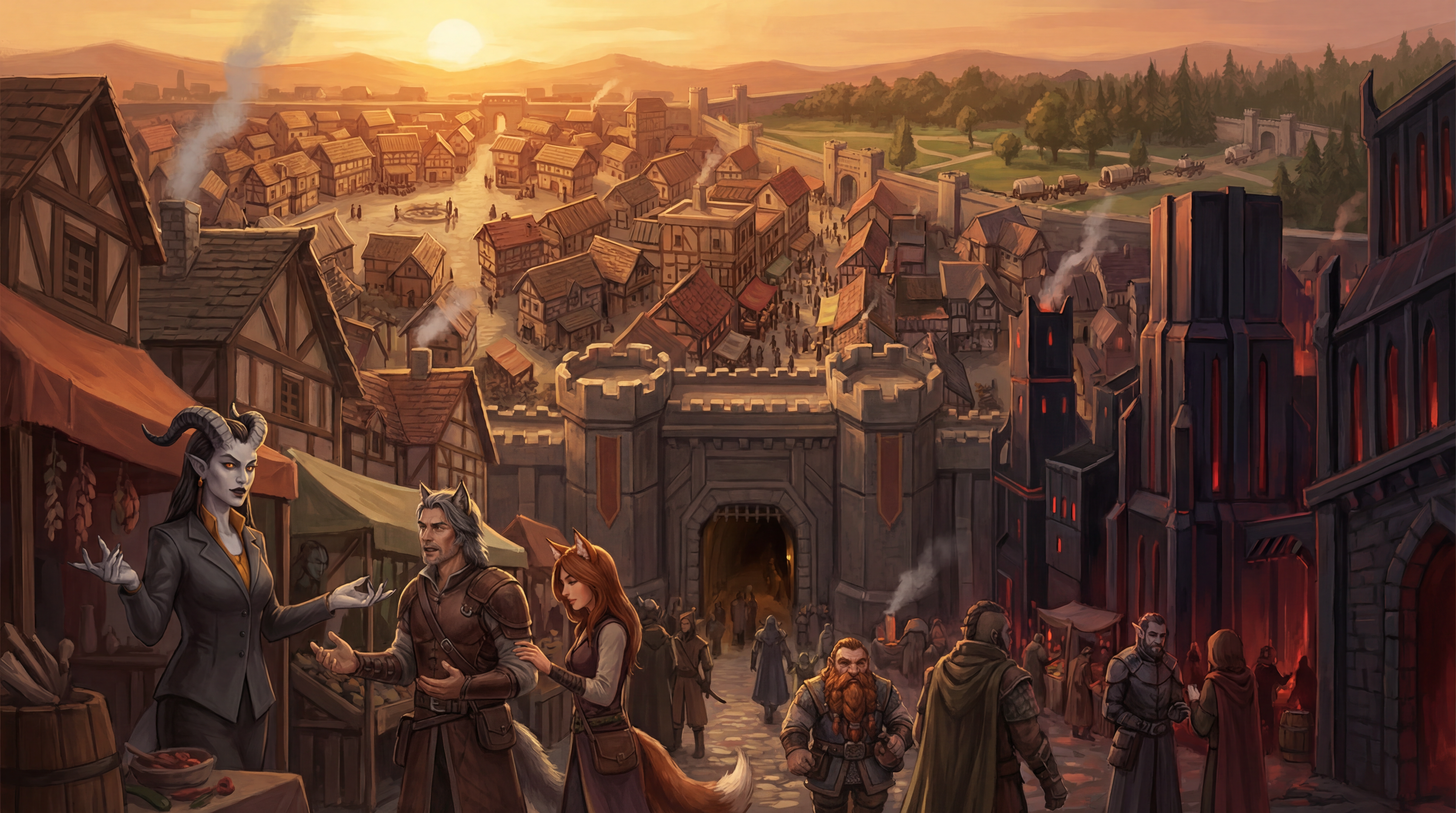
The Compact establishes Mura as neutral ground: no armed forces beyond personal protection, no aggressive actions against other species' representatives, no interference with trade. All major powers have signed. All major powers have reasons to honor it.
If war breaks out between Demons and humans, with the Beastkin caught in the middle, can Mura really remain neutral? Everyone says they want to preserve Mura's neutrality. Everyone is quietly preparing for the possibility that they can't.
Under StrainThe Upcoming Summit
Maelketh has requested a summit in Mura: Demons, Beastkin, Dwarves, humans, and any Elves who care to attend. None will.
He frames it as an opportunity to address legitimate Demon needs through legitimate means. Others frame it as an opportunity for Demons to divide potential opposition before striking. Both interpretations are probably correct.
Maelketh
Demon Delegation
Khatri Sundermane
Beastkin Confederation
Aldric Vane
Human Representative
Brennmarr Valdis
Dwarven Observers
POSSIBLE FUTURES
BEST CASE
Negotiated agreements, willing partnerships, gradual integration that benefits both species. This is what the Border Communities have, mostly. It's what Veleth Emberheart advocates. Proof that coexistence is possible.
MOST LIKELY
Something messy in between. Pressure, concession, resistance, accommodation. Some humans thriving under Demon patronage. Others suffering under Demon exploitation. No clean resolution.
WORST CASE
Annexation, forced feeding, humans reduced to emotional livestock for Demon consumption. This is what the Grove fears. It's what Maelketh's drilling armies suggest, whether he intends it or not.