The Crossing
Not From Here
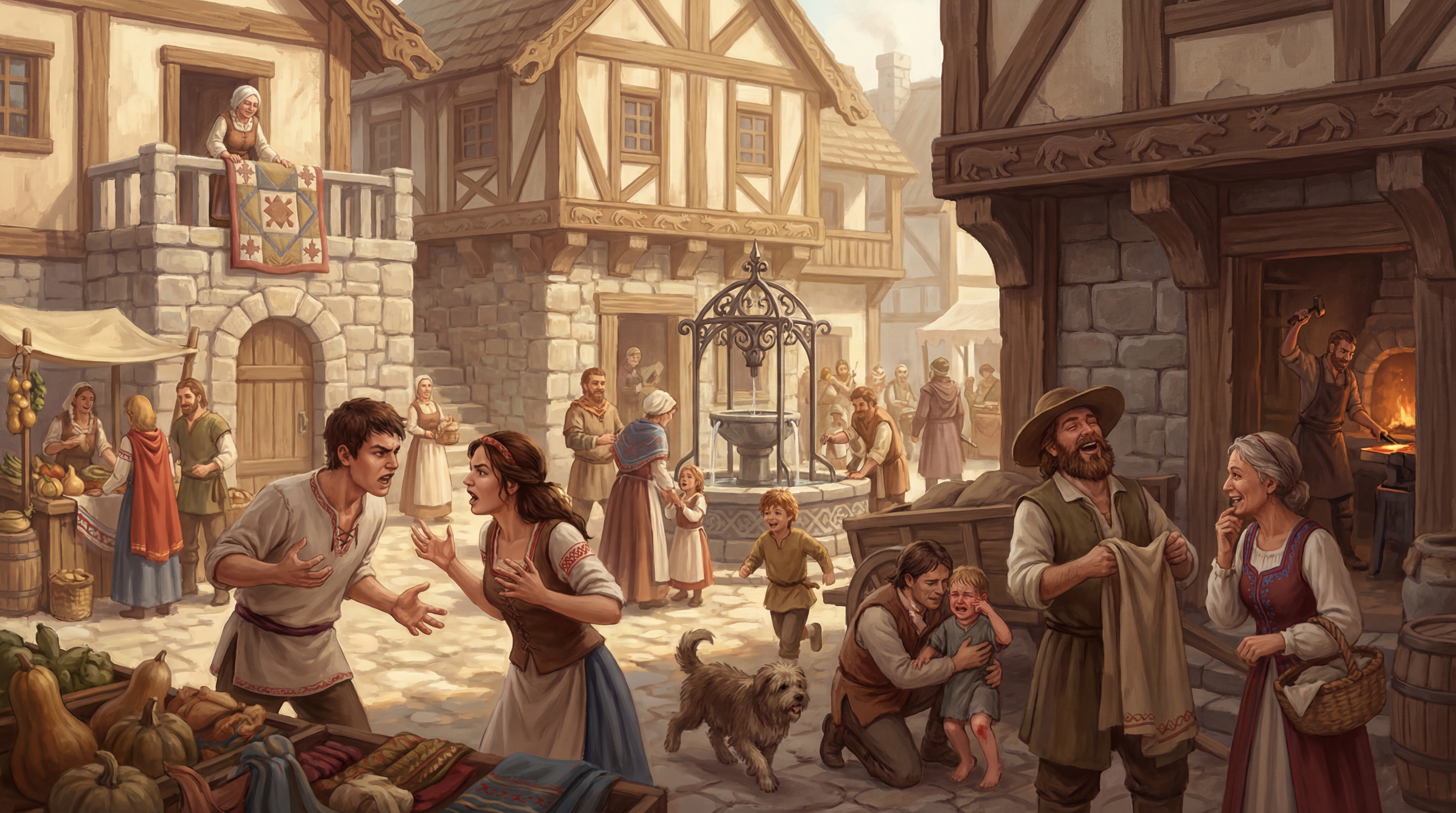
The humans are not native to Khevari, or if they are, they arrived by different means than the other races. Human mythology speaks of the Crossing—a migration from somewhere else, somewhere where humans were numerous and dominant. The stories disagree on why they left. Disaster. War. Divine punishment. Simple wandering.
What they agree on is that the Crossing was one-way. Whatever home existed before, it's gone now. Khevari is what they have.
They were never many here. The first humans to emerge in Khevari found it already populated, already claimed, already organized around non-human needs. They had no time to build empires. They adapted instead, finding niches where they could survive.
The Crossing gave humans one gift: the knowledge that they survived something before. Whatever Khevari throws at them, they've weathered worse. Probably.
Rarity and Value
Total human population is perhaps twenty thousand across all settlements—a rounding error compared to the Beastkin Confederation's millions or the Dwarven Holds' hundreds of thousands. This scarcity has shaped human identity profoundly. Every human matters. Every death diminishes something that cannot easily be replaced.
This would be merely sad if it weren't for the Demons. Human emotional intensity makes them the richest feeding source in Khevari. A single willing human provides more sustenance than a dozen of any other race. This transforms human rarity from demographic footnote to political crisis.
Some humans have learned to leverage their value. If Demons need them, that's power—power that can be bargained, traded, weaponized. Others find this obscene, reducing human worth to feeding potential. The debate splits communities.
Settlements
Hearthhollow
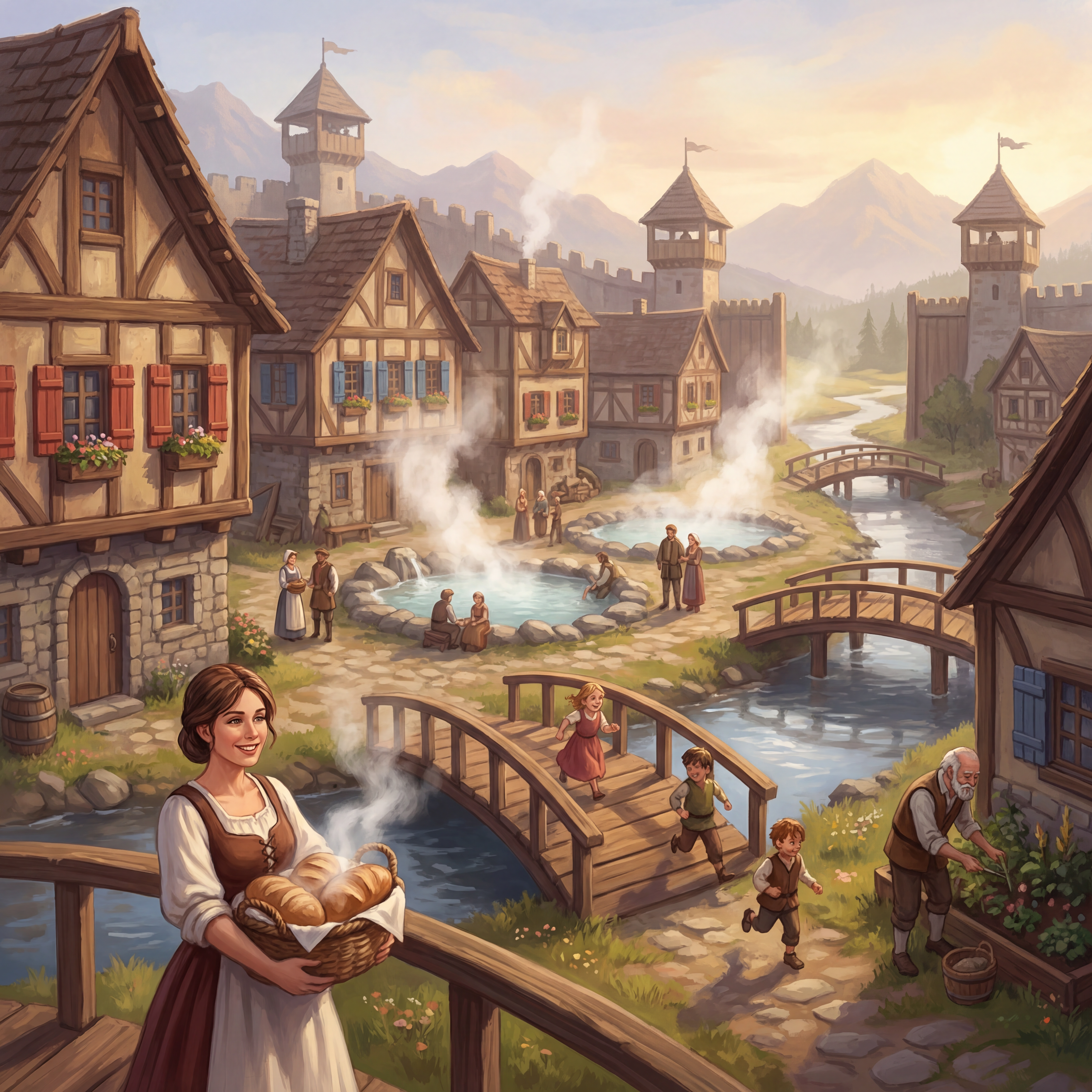
~3,000 souls • The CapitalThe largest human settlement, barely a village by Dwarven standards. Built around a natural hot spring, connected by three bridges, surrounded by farms. The Council meets here—representatives from all settlements trying to coordinate without authority to command. The architecture is practical, defensive, and cramped. Everything is built to be held if it comes to that.
The Border Communities
Various • The EdgeVillages along the edge of human territory where it meets the Demon Domains. Here, humans and Demons have lived alongside each other for generations. Intermarriage exists. Co-habitation exists. The horror stories are real—but so are the love stories. These communities have developed their own norms: explicit feeding agreements, negotiated boundaries, documented consent.
The Grove
~200 devoted • The ResistanceA religious community centered on human-only spirituality and active rejection of Demon influence. Their theology holds that humans have divine purpose the other races lack, that the Crossing was mission not exile. Brother Ash leads with charisma that borders on fanaticism. Minimal political power but outsized moral influence.
The Demon Question
The One Taboo
The one taboo that remains strong among humans is undisclosed Demon partnership. The fear is practical: a Demon who has fed well on someone can influence their thinking. Not mind control—nothing so crude. But regular, intense feeding creates bonds that shape behavior.
A human deeply fed upon might start prioritizing their Demon's needs without consciously deciding to. An influenced human in the wrong position could betray everyone without realizing they're doing it.
Even the Border Communities enforce disclosure requirements. If you're feeding a Demon, everyone needs to know. The partnership itself isn't forbidden—but the secrecy is.
The healthiest human-Demon partnerships involve clear communication, explicit boundaries, and community awareness. Many such partnerships are genuinely loving. That doesn't make them simple.
Politics
Adaptation as Identity
Human culture in Khevari has been shaped by minority status. They are adaptable because they had to be. They work hard because there was no alternative. They value family and community intensely because those bonds were often all that protected them.
There is a chip on the collective human shoulder. Other races are older, more powerful, more numerous, more magical. Humans survive through stubbornness and cleverness and a refusal to accept their own insignificance.
Humans learn fast. They have to. A human who can't read situations, can't adapt to changing circumstances, can't figure out what each non-human race needs and wants—that human doesn't survive long.
Emotional Intensity
Sexuality and partnership are less regulated than in many societies. When you're a tiny minority struggling to survive, reproduction matters more than propriety. Extended families, multiple partnerships, children raised collectively—these are practical adaptations.
But what truly sets humans apart is their emotional intensity. A human might experience joy, anxiety, anger, tenderness, and grief in a single hour, each emotion genuine and intense. This is why Demons want access to humans. Not as slaves, not as property, but as sources of something no other race can provide.
Humans feel everything, all the time, with devastating authenticity. It is their greatest vulnerability and their most valuable asset.
Notable Humans
Aldric Vane
Council Leader, HearthhollowLeads Hearthhollow's Council—a position he compares to "herding cats through a fire." Sixty years old, experienced in Beastkin and Dwarven diplomacy, and out of his depth with the current crisis. Maelketh's diplomatic overtures are beyond anything he has faced. Refusing risks war humanity cannot win. Accepting risks transformation humanity might not survive. He spends his nights awake. He looks older than he did a year ago.
Sera Nighthollow
Border VoiceThe most prominent voice from the Border Communities, who has lived her entire life alongside Demons. "They need us," she argues. "That gives us power, if we use it right." Her own partnership with the Demon Vethraxis is the foundation of both her credibility and her controversy. Critics call her compromised. She calls this paranoia. Brother Ash calls her a collaborator. She calls him a fool. Both are probably right.
Brother Ash
Grove LeaderPreaches total separation from all non-human influence, especially Demons. Charismatic in ways that unsettle those who meet him. His conviction is absolute. His followers number perhaps two hundred—but his influence extends further. His arguments circulate among humans who would never join his community but find themselves nodding along. Those who knew him before speak of a different man. Something changed him. He does not discuss what.
Characters
No human characters available yet. Check back as Khevari grows.